
📖 Read the complete guide: The Complete Milking Table Guide, everything you need to know about milking tables.
How to Build a DIY Milking Table (And Why Most People End Up Buying One Instead)
A real, step-by-step guide to building your own, plus the honest truth about why most builders become buyers.
Shop Milking Tables →In This Article
Who This Is Actually For
Build it if you have used a jigsaw, want a size nobody sells, and can give it most of a day plus a second session for finishing. Skip it if it has to be right first time, or discreet and storable from day one. Jump to the verdict if that is you.
Do not build the top from scratch. Buy a cheap folding massage table and cut into it. You inherit a finished frame, legs, height adjustment, foam and upholstery, and your job shrinks to one opening and one repair.
Choosing the Right Base Table
Get this wrong and careful cutting will not save it.

Apply those six lines to a marketplace search and most of the first page falls away immediately. Look at the results above: the cheapest listings are aluminium framed, because aluminium is lighter to ship and cheaper to make, and they are the ones you cannot use. Several more top out around 27 or 28 inches, which reads fine on a spec sheet and leaves nobody any room underneath. A few have a deck under two inches of foam. That is most of a search page gone on three criteria.
What survives tends to be the slightly heavier, slightly duller wooden deck tables in the middle of the price range. They photograph worse and they are the right purchase. If a listing does not state the deck material, assume aluminium and move on, because sellers with a wooden deck say so.
Check the Underside First
Folding tables carry load through tension cables and crossbars. Turn it over, photograph the underside, and mark every cable, hinge and bracket on the top surface. Plan the opening around them.

What You'll Need
Materials
- Folding massage table, wooden deck, 30 in wide, 70 in or longer
- PU vinyl to patch and finish the opening, matched to the table
- PVC U channel trim sized to your deck thickness
- Heavy duty staples, 3/8 in
- Contact adhesive for foam and vinyl
- Sandpaper, 120 and 220 grit
- Wood sealer or polyurethane for the cut edge
Tools
- Jigsaw, fine tooth blade
- Drill, 1/2 in bit
- Heavy duty staple gun
- Clamps, straight edge, marker, tape measure
- Craft knife, fresh blades
- Dust mask and eye protection
Optional
- Blackout fabric and hook and loop tape for a privacy skirt
- Felt pads for the leg bottoms
- Cardboard sheet for templating
A full day for cutting and finishing. Work ventilated, and cut MDF outside if you can.
Getting the Opening Right
Rectangular, Not Round
Most guides say cut a circle, because a hole saw is easy to describe. It is the wrong shape.
People differ in height and lie in different positions. A circle only accommodates that by growing in every direction, and every inch across the deck is structural material gone from where the load sits. An elongated opening gives you positional range along the length while the width stays modest, so the deck keeps its stiffness. That is why ours are elongated.


Too Small Is the Other Failure
Worth understanding why this is the one decision you cannot walk back. Everything else in this build is recoverable: a rough edge can be sanded again, a bad staple job can be redone, a skirt can be remade. An opening cut to the wrong size or in the wrong place is permanent, because you are removing material from a deck that has to keep carrying weight. That is the whole reason for templating in cardboard rather than trusting a number.
People cut small because small feels safer, then the opening presses on everything it should leave alone. It has to clear the whole anatomy comfortably, testicles included. If anything is pinched against the edge, it is too small, and no amount of foam or trim fixes that.
Size It With Cardboard
Cut your shape from a cardboard sheet, lay it on the table, have the person who will use it get on properly. Two minutes of that beats any dimension printed on a page, this one included. Then position it clear of the fold line and every bracket you marked earlier.
Step by Step Build Guide
Cutting is quick. Finishing decides how it turns out. Do not try both in one evening.
Map the Underside
Photograph the underside, then mark every cable, hinge and bracket on the top surface with masking tape. Fifteen minutes here prevents the worst mistake in the build.
Template in Cardboard
Cut the shape, lay it on the table, test it with a person on it. Adjust the cardboard, then trace the final outline onto the vinyl.
Open the Covering
Cut the vinyl inside your line with a fresh craft knife blade, leaving a margin to fold down later. Peel it back, cut away the foam beneath, expose the bare deck.
Drill and Cut
Clamp the table. Drill a 1/2 inch starter hole just inside the line, drop in a fine tooth jigsaw blade, follow the line slowly. Cut the straight runs first, then ease the corners into a radius.
Sand and Seal
120 grit, then 220. Run a bare hand round the whole opening; if anything catches, keep going. Then seal it. Raw MDF drinks moisture, swells, and pushes the upholstery out of shape.
Finish the Edge
Covered in its own section below. This is the part that decides whether you are pleased with the table.
Load Test
Press down hard along both sides of the opening and at the corners. Listen for creaking, watch for flex, check the legs lock even. Any give means reinforcement underneath before anyone uses it. Do not skip this because you are fairly sure it is fine.
Finishing the Opening
| Method | Effort | Holds Up | Verdict |
|---|---|---|---|
| Staples | Low | Works loose, vinyl tears at the staple line | Fine for a first build |
| Wrap and staple | Medium | Better feel, same fixing weakness | Middle ground |
| PVC U channel trim | Higher | Load sits on trim, board capped, shape held | Pro job |
One thing worth knowing before you choose: the opening edge takes more punishment than any other part of the table. It is gripped, leaned on, slid across and wiped down, over and over, and it does all of that while the vinyl around it is under permanent tension from being stretched over the cut. That combination is what eventually pulls staples out or tears fabric at a fixing point. Trim removes the tension from the fabric altogether, which is why it lasts.
Method One: Staple It
Pull the spare vinyl through, stretch it against the underside, staple it off. Work opposite sides alternately to keep tension even. Quick, cheap, respectable from above, rough underneath, which matters very little because nobody inspects a table's underside.

Method Two: PVC Edge Trim
A U channel sized to your deck thickness press fits over the sanded edge. The edge stops tearing because load sits on trim instead of fabric, the board is capped against moisture, and the opening keeps its shape as the covering relaxes.

It matters more on an elongated opening, where the long straight runs are exactly where unsupported vinyl sags first. Cutting rectangular? Budget for trim as part of the build.

Adding a Privacy Curtain
Hides the underside and the cables, and turns obvious equipment into a table with a cover on it. Blackout curtain fabric or heavy polyester.
Measure the frame perimeter, add two inches at the top, cut to the floor. Wipe the frame with alcohol, run self adhesive hook and loop tape around it, sew or glue the matching strip to the fabric. Leave a gap at one end for entry.
It comes off in seconds, so the table goes back to looking like a massage table. Most of the discretion problem, solved.

Common Mistakes
Cutting a circle
A hole saw is easy, which is why most home builds have the wrong shape. Length buys fit, width costs strength.
Cutting it too small
It has to clear the whole anatomy comfortably, testicles included. Pinching against the edge means too small.
Hitting the cables
Folding tables carry load through tension cables. Cut one and the table gives way all at once. Map the underside first.
Setting it too low
At 24 inches you get a neck ache in four minutes. The space underneath is the entire purpose.
Thin foam
Under two inches and the deck makes itself felt, with the cut edge sitting close to skin.
Raw edges
Unsanded, unsealed MDF is rough, swells with moisture, and will eventually catch somebody. Sand to 220 and seal it, unless you fancy explaining to a doctor exactly how you got a splinter there.
Square corners
Sharp internal corners concentrate stress and start cracks. Round them.
Skipping the load test
Test with weight before anyone relies on it. Push hard either side of the opening.
The Honest Verdict: DIY or Buy?
I design these for a living, so weigh that. Here is the real answer.
Build It If
The project itself appeals, you need a size nobody sells, or you already own the tools. A home build with a wooden deck, an elongated opening, trimmed edges and a skirt is genuinely good equipment, and this guide gets you there.
Buy It If
Three things get underestimated: how long finishing takes, what the tools cost if you do not own them, and how much the first attempt only teaches you what a second attempt should be.
A manufactured table also arrives with a machine finished edge, an opening geometry that has been through several iterations, and packaging that says nothing. The geometry you can reproduce at home. The edge finish is harder. If you already suspect you will not finish the fiddly parts properly, believe yourself.

If a weekend of sanding is not the plan, our milking table range is where the geometry in this guide came from.
Shop Ready Made Options
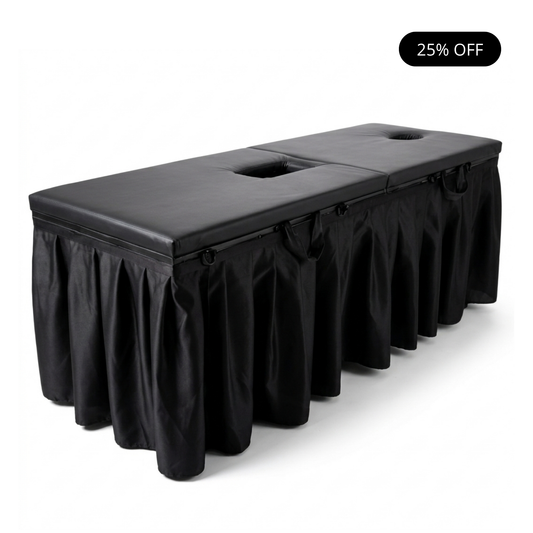
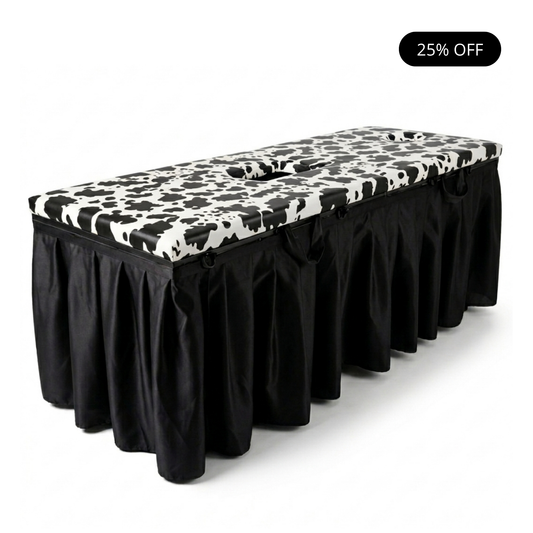
No time to build? Here is what we make. MILKER PRO is the top of the range and the table the rest of this guide is aiming at.

Looking for more options or professional-grade equipment?
Browse All Milking TablesPrices marked with an asterisk are indicative and change. The product page is always the accurate one.
Why Customers Choose Home in Bold
We've been designing and refining milking tables since 2023. Every table is built by hand, tested extensively, and backed by real support from our team. No cheapskate materials, no wobbles, no regrets.


